Eyeing a gated home in Paradise Valley Village and wondering what those HOA dues actually cover? You are not alone. Between lush entries, private roads, and security, it can be hard to tell where your dollars go and what risks to watch. In this guide, you will learn what gated HOAs in this area typically include, how Arizona law shapes your rights, the biggest cost drivers, and the due diligence steps that protect you before you buy or sell. Let’s dive in.
Paradise Valley Village vs Town
Paradise Valley Village sits inside the City of Phoenix. It is different from the separate Town of Paradise Valley to the north. If a home is in the Village, Phoenix city codes and the Phoenix Fire Department’s standards apply. Always confirm the exact jurisdiction because it affects permits, emergency access rules for gates, and which departments oversee compliance.
What HOAs Usually Cover
Gated-community HOAs in Paradise Valley Village are private associations that run and maintain common property, enforce community rules, and manage long term budgeting for shared infrastructure.
Common area landscaping
You can expect routine landscape care for entries, medians, and parks, along with irrigation system operation and repairs. In Phoenix, irrigation often represents a large recurring cost. HOAs also handle lighting, signage, hardscape features, and drainage in shared spaces. Some contract for pest control in common areas.
Gates and security
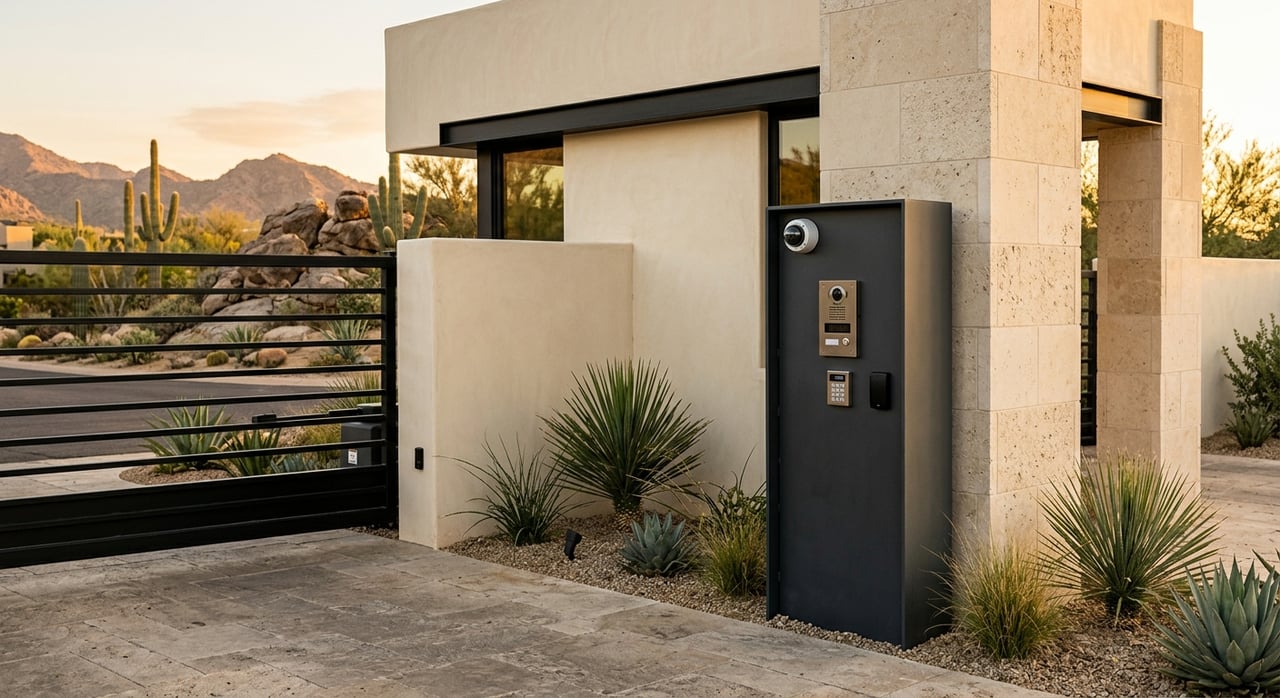
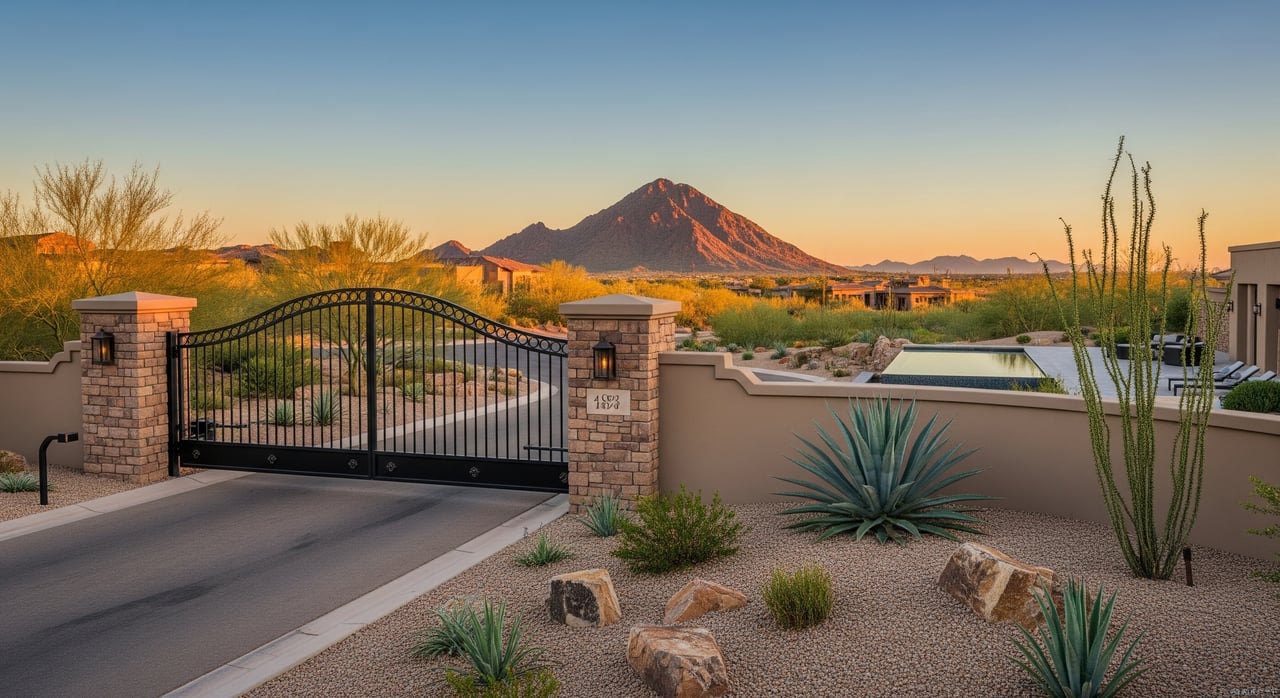
HOAs fund gate equipment, electrical power, ongoing maintenance, and access systems like remotes and fobs. Some communities add camera systems, remote monitoring, or staffed gate attendants. The association manages vendor and guest access and typically reserves for future replacement of gate operators and hardware.
Private roads and lighting
If the roads are private, the HOA usually maintains paving, repairs, seal coats, striping, street sweeping, and signage. Street lighting inside the gates is often an HOA responsibility. Phoenix does not require snow removal, but dust and erosion control can be part of the plan.
Amenities and pools
Pools, spas, fitness rooms, clubhouses, sport courts, playgrounds, and trails are maintained by the association. That includes chemicals, routine cleaning, and compliance with county health rules. Reservation systems and amenity rules also fall under HOA administration.
Building exteriors and insurance
In attached or multi-unit communities, the HOA may cover exterior building maintenance, roofs, painting, stucco repairs, and shared plumbing or electrical. A master insurance policy typically covers common structures and sometimes exterior building elements. You usually carry your own policy for interior finishes and personal property.
Utilities and services
Expect HOA-paid water for common-area irrigation and electricity for gates and lighting. Some communities include trash or valet-trash service in dues. Others rely on municipal trash while the HOA funds supplemental services.
Administration and governance
Dues support the management company, bookkeeping, accounting, legal counsel, and community manager. The HOA prepares budgets, runs reserve studies, collects assessments, enforces CC&Rs, and maintains insurance such as general liability and directors and officers coverage.
Enforcement and approvals
The HOA enforces rules through notices, fines, and suspension of privileges. It can place liens and, when allowed by law and the governing documents, foreclose for unpaid assessments. Architectural control is common, so exterior changes, paint, pools, landscaping, HVAC screening, and solar arrays often need approval.
Legal rules in Arizona
HOAs operate under recorded CC&Rs, bylaws, and Arizona statutes for planned communities or condominiums. Arizona law recognizes an association’s power to levy assessments, adopt rules, and record liens. Procedures for owner notices, meetings, and record access are outlined by statute and the governing documents.
Sellers typically provide buyers with governing documents, current budgets, and information on assessments and litigation. Buyers often request an HOA resale or estoppel certificate to confirm dues status and any known special assessments or claims.
Because Paradise Valley Village is inside Phoenix, city building, fire, and roadway codes apply. Gated entries must provide approved emergency access solutions so first responders can enter quickly. HOA approvals do not replace city permits, so you still pull permits for work that requires them.
Arizona also limits unreasonable restrictions on solar energy devices. Many associations have architectural guidelines that set reasonable time, place, and manner rules for solar installations. Always review the specific CC&Rs and guidelines.
What drives HOA dues
Every HOA budget is different, but common categories and local cost drivers can help you read the numbers with confidence.
Operations and reserves
Dues fund landscaping, gate staffing or monitoring, pool and amenity upkeep, utilities, janitorial, and repairs. Administrative costs include management, accounting, legal, and insurance premiums. Healthy associations also fund reserves for long term replacements, such as gates, paving, roofs, pool equipment, and irrigation systems. Strong reserve planning usually means fewer special assessments.
Desert climate costs
Phoenix heat accelerates wear on pools, mechanical systems, roofing materials, and sealants. Irrigation costs are significant, and drought rules can influence landscape choices. Some communities choose xeriscaping or turf reduction to lower water bills, which can require one time conversion costs.
Amenities and security
Clubhouses, pools, fitness centers, and staffed security drive higher operating costs. Upscale gated neighborhoods often invest more in these features, which can push dues higher.
Roads and paving
Private road networks require periodic seal coats and resurfacing. These are large reserve items that well run HOAs plan for years in advance.
Insurance and legal
Master property and liability insurance premiums rise with amenities and exposure, especially with pools and large common areas. Litigation and collections also add costs when disputes or high delinquency rates exist.
Fee ranges to expect
In Phoenix-area gated communities, dues vary widely based on size, amenities, and whether streets are private. Some communities charge modest monthly amounts for limited common areas. Others with robust amenities or guard services can run several hundred dollars per month or more. The best approach is to request the current budget and reserve study rather than rely on averages.
Buyer due diligence checklist
Before you waive contingencies or write an offer, gather documents and clarity that reduce surprises.
- CC&Rs, bylaws, articles, and any amendments.
- Rules and regulations, architectural guidelines, and fine schedules.
- Current operating budget and 12 to 36 months of financials.
- Reserve study and the HOA’s reserve funding policy.
- Year to date budget versus actual and recent bank statements.
- Insurance declarations for the master policy and any owner requirements.
- Board meeting minutes for the last 12 to 24 months, or summaries of major actions.
- Disclosures for pending litigation, planned capital projects, and special assessments.
- Resale or estoppel certificate showing the owner’s balance, current assessments, and known upcoming assessments or claims.
- Vendor contracts for gates, security, landscaping, pools, and the management company.
- Violation history for the property and any open architectural approvals.
Key questions to ask
- What exactly is included in the dues, listed line by line?
- How much is in reserves, and what percent of the recommended level is funded?
- Are there planned special assessments, capital projects, or active litigation?
- What are the rules on exterior changes, solar panels, HVAC screening, and rentals?
- How is security delivered and funded, and what is the replacement schedule for gate systems?
- How does emergency access work for fire and ambulance access, and is it compliant with Phoenix requirements?
- Are roads private and HOA maintained, or dedicated to the city?
- What are the collection and lien enforcement policies for overdue assessments?
Seller checklist
Selling inside a gated HOA requires proactive preparation to avoid delays and re negotiations.
- Order the resale or estoppel certificate early.
- Gather CC&Rs, rules, budgets, financials, reserve study, and insurance declarations.
- Disclose any known violations, pending fines, or open architectural items.
- Confirm current dues, any special assessment balances, and upcoming assessments.
- Provide recent board minutes or summaries that disclose major actions.
- Clarify whether roads and gates are HOA maintained, and show any service contracts.
Red flags to watch
A few patterns can signal higher risk of future assessments or friction.
- Chronically underfunded reserves or no reserve contributions in the budget.
- Repeated special assessments in recent years.
- High delinquency rates and heavy collection activity.
- Frequent board turnover or poor financial documentation.
- Insurance coverage gaps or exclusions that do not match the community’s exposures.
- Rules that may conflict with state protections, especially around solar.
Local operations to confirm
Paradise Valley Village communities share several practical issues that affect your costs and experience.
- Emergency access for gates. Confirm the rapid entry setup approved by local fire officials and the HOA’s contingency plan for outages.
- Irrigation and water strategy. Ask about any turf to xeriscape conversions, drought responses, and how the irrigation system is maintained.
- Heat related wear. Review reserve timelines for pools, roofs, sealants, and mechanicals given Phoenix conditions.
- Trash and valet services. Clarify what is included in dues and what is municipal.
- Private roads and paving cycles. Understand the resurfacing schedule, vendor contracts, and reserve funding for roads.
Making the right fit
A gated community can deliver privacy, consistent streetscapes, and a lock and leave lifestyle. The key is understanding what your dues buy, how well the HOA plans for the long term, and how local rules shape daily life. When you know the budget, reserves, and governance are sound, you get the benefits without surprises.
If you want a quiet, confident path to the right gated home in Paradise Valley Village or nearby neighborhoods, we are here to help. Reach out to The Hoods Real Estate Team for boutique, high touch guidance informed by local experience with Phoenix area HOAs.
FAQs
What do gated HOA dues usually include in Paradise Valley Village?
- Typically landscape and irrigation for common areas, gate maintenance and security, private road upkeep, pools and amenities, management, insurance, and reserves.
Can an Arizona HOA place a lien or foreclose for unpaid dues?
- Associations commonly have lien and foreclosure rights under Arizona law and their governing documents, with required notices and procedures.
Who maintains streets inside a gated community in Phoenix?
- If streets are private and owned by the HOA, the HOA maintains them. If the streets are dedicated to the city, the city handles maintenance.
Are solar panels allowed in HOA communities here?
- Arizona limits unreasonable HOA restrictions on solar. Most communities require architectural approval and may apply reasonable placement and aesthetics guidelines.
How do emergency services access gated communities in Phoenix?
- Gated entries must provide approved rapid entry methods so first responders can enter quickly. The HOA should maintain compliant procedures and equipment.