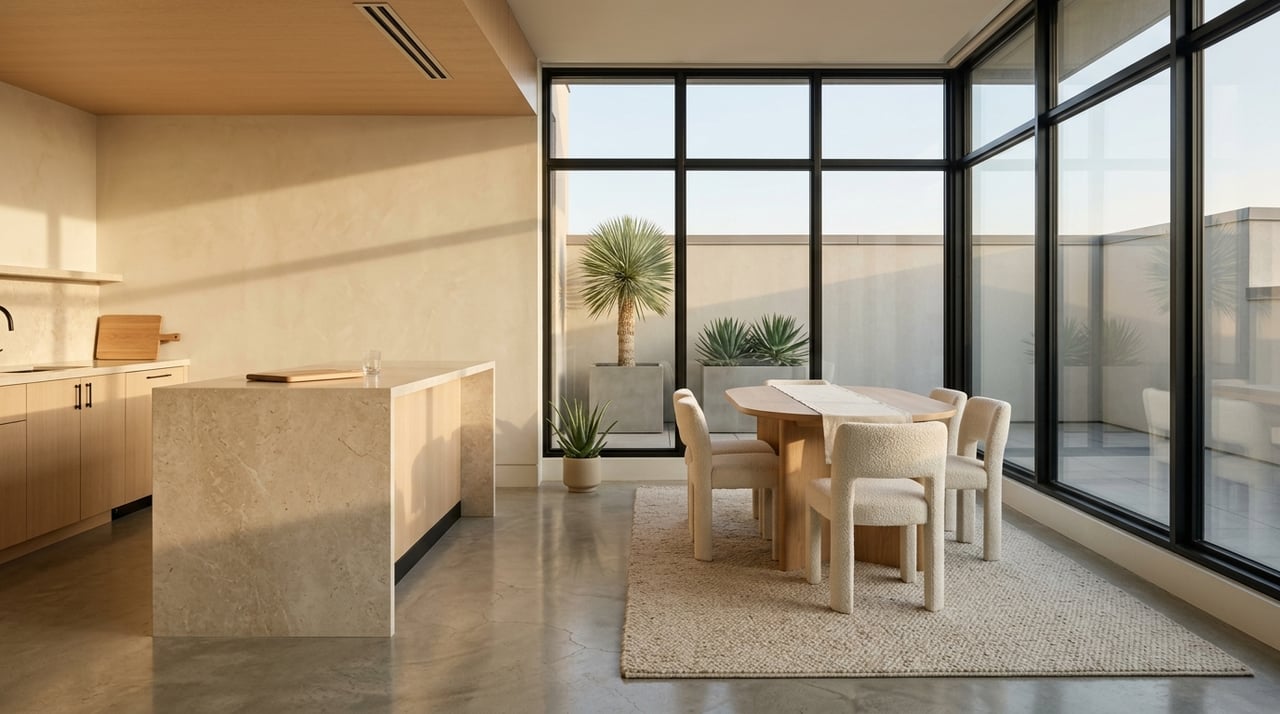
If you own a luxury loft in Phoenix, pricing it right can feel like the hardest part of the sale. You want to protect your value, attract serious buyers, and avoid sitting on the market longer than necessary. In today’s market, the best pricing strategy is not about chasing a citywide average. It is about understanding your building, your unit, and the buyers most likely to respond. Let’s dive in.
Phoenix market context matters
Phoenix is active, but it is not an anything-goes market. Recent market snapshots show average days on market ranging from 79 to 87 days depending on the source, with median residential sales prices around $449,000 to $487,000 and about 3.37 months of supply in the ARMLS April 2026 report.
That backdrop gives you useful context, but it does not tell the full story for a luxury loft. Loft and condo pricing at the upper end is thinner, more building-specific, and often more sensitive to monthly carrying costs than the broader Phoenix housing market. Mortgage rates also remain a factor, with Freddie Mac reporting a 30-year fixed rate of 6.53% on May 28, 2026.
Luxury loft pricing is not one-size-fits-all
A Phoenix luxury loft should not be priced by pulling a simple citywide price-per-square-foot number. The most defensible pricing usually starts with the building itself, then narrows to your unit’s position, view, finish level, parking, storage, and HOA economics.
That matters because buyers in this segment are rarely comparing your loft to every condo in Phoenix. They are often comparing it to units in the same building, similar projects nearby, or listings that offer a similar lifestyle and cost structure.
Start with same-building comps
Comparable sales are still the anchor of smart pricing. Recent sales in the same building, or in a very similar nearby project, usually tell the clearest story because they reflect what buyers have already accepted in a similar setting.
For condo and loft valuation, the project matters as much as the unit. Appraisal guidance for condos calls for analyzing both the individual unit and the project itself, including the unit’s location within the project, amenities, and HOA assessment.
Why same-building sales carry more weight
In a loft building, two units with similar square footage can still command very different prices. Floor level, orientation, natural light, renovation quality, outdoor space, and views can all create meaningful pricing differences.
That is why broad neighborhood averages often miss the mark. In the luxury loft segment, buyers tend to notice details quickly and price sensitivity increases when monthly dues and financing costs are part of the decision.
Building reputation can support a premium
In Phoenix loft pricing, the building itself is often part of the value proposition. A well-known, well-kept project with a strong amenity package and solid day-to-day upkeep can support a stronger asking price before a buyer even steps inside your unit.
This is especially true in high-rise and amenity-rich product. Features such as a pool, spa, sauna, fitness space, party room, courtyard, and secure access can all contribute to marketability when buyers see them as part of a polished ownership experience.
Phoenix examples show the spread
At Orpheum Lofts, a 953-square-foot unit at 114 W Adams sold on December 5, 2025 for $370,000, or about $388 per square foot, with HOA dues of $806 per month. The building’s appeal includes a historic renovation, pool, fitness center, steam room, sauna, clubroom, courtyard, and downtown access.
In the same broader urban core, nearby examples shown on that listing page include another Orpheum unit at $355,000 for 953 square feet and a unit at 16 W Encanto at $275,000 for 845 square feet. That kind of range shows why building identity and project appeal matter so much.
At 6502 N Central Ave, recent sales shown by Redfin include $460,000 for 1,444 square feet, $470,000 for 1,279 square feet, and $700,000 for 1,880 square feet, while Unit D402 is listed at $1,295,000 for 1,880 square feet. The listing emphasizes Camelback Mountain views, two balconies, two secured parking spots, a storage locker, and HOA coverage that includes several utilities and common-area maintenance.
The lesson is simple. Even in the same building, a premium unit can sit in a very different price band.
Views, floor, and orientation matter
For many Phoenix luxury loft buyers, the view is not a bonus. It is part of the purchase decision. Downtown skyline views, South Mountain views, and Camelback Mountain views often show up prominently in marketing because they can influence both desirability and value.
Higher floors, stronger orientation, and protected sight lines can help justify a premium. If your loft has a standout view corridor or a more desirable stack within the building, that should be reflected in the pricing conversation.
Interior condition changes the pricing range
Condition is another major driver. A move-in-ready loft with a fully renovated kitchen, updated baths, modern flooring, and refined fixtures should not be priced the same as a unit with original finishes just because the square footage is close.
That distinction matters in appraisal as well. Property condition guidance for comparable analysis makes clear that updated and remodeled homes are not automatically equal to dated properties, even when size is similar.
Updated versus remodeled
This is where sellers sometimes leave money on the table. If your loft has had thoughtful improvements, pricing should reflect not only the cost of those upgrades but also the buyer convenience they create.
That does not mean every dollar spent comes back dollar for dollar. It does mean strong condition and presentation can materially improve marketability and push your loft toward the top of its likely pricing range.
HOA dues and assessments affect buyer math
HOA dues are a key part of the pricing conversation for Phoenix lofts. Higher dues are not automatically a problem, especially when they cover meaningful services such as exterior maintenance, common areas, utilities, insurance, amenities, and reserves.
Still, buyers look closely at the full monthly cost of ownership. If dues are high, they need to make sense in relation to what the building delivers. If there are pending special assessments or questions about reserves, buyer confidence can soften.
What buyers usually want to know
When buyers review a luxury loft, they often ask:
- What do the HOA dues include?
- Are the amenities well maintained?
- Are reserves healthy?
- Is there a pending special assessment?
- How do monthly costs compare with similar buildings?
For sellers, this means pricing should account for both the benefits and the friction of the HOA structure. A loft with strong services, healthy maintenance, and clear value may hold pricing better than one with lower dues but fewer benefits or more uncertainty.
Parking, storage, and convenience add value
In urban Phoenix, convenience features can have real pricing power. Secured parking, elevator access, lobby attendants, and storage reduce everyday friction and can matter even more for second-home buyers or buyers who want a lock-and-leave lifestyle.
These features may not always dominate the headline marketing, but they often influence final buyer choice. In a smaller luxury buyer pool, that kind of practical convenience can help your loft stand out.
Price for your goal, not just the market
A smart list price also depends on your goal. If you want to move quickly, a more competitive ask may help create early interest and reduce time on market. If you have more flexibility, you may choose to test a stronger price, especially when your unit has standout features and limited direct competition.
The key is to make that choice intentionally. Overpricing can lead to stale market time, while underpricing can leave value behind. In a segment where the buyer pool is narrower, first impressions matter.
The strongest pricing story for a Phoenix loft
For most Phoenix luxury lofts, the clearest pricing story looks like this:
- Project reputation and building appeal set the baseline.
- Unit location, floor, and views shape the premium.
- Interior finish level and condition refine the range.
- Parking, storage, and ease of living add practical value.
- HOA dues, reserves, and assessments influence buyer comfort.
- Recent same-building or near-identical comps anchor the final number.
That approach is more credible than relying on a broad condo average across Phoenix. It also gives buyers a pricing narrative that feels logical, supportable, and easier to justify when they compare your loft to other options.
Why presentation still matters
Even the best pricing strategy works better when presentation is strong. In the luxury segment, buyers respond to polished visuals, clear positioning, and a listing story that explains why a property belongs where it is priced.
That is especially true when your loft offers features that are hard to duplicate, such as a rare floor plan, a standout view, elevated finishes, or a respected building identity. Those details should not be left for buyers to guess.
If you are thinking about selling a Phoenix luxury loft, the right pricing strategy starts with precision, not assumptions. A boutique team that understands luxury presentation, building-specific value, and how Phoenix buyers compare loft options can help you frame the number with confidence. Connect with The Hoods Real Estate Team for a personalized valuation and pricing strategy.
FAQs
How should you price a Phoenix luxury loft in today’s market?
- Start with recent comparable sales in the same building or a very similar nearby project, then adjust for views, floor level, condition, amenities, parking, storage, and HOA economics.
Why do same-building comps matter for Phoenix loft pricing?
- Same-building comps usually provide the best benchmark because they reflect the same project reputation, amenity package, HOA structure, and buyer expectations.
Do HOA dues hurt Phoenix luxury loft value?
- Not always. HOA dues can support value when they fund meaningful services, amenities, maintenance, insurance, and reserves, but weak reserves or pending assessments can weigh on buyer confidence.
Do upgrades increase the value of a Phoenix luxury loft?
- Often, yes. Updated or remodeled kitchens, baths, flooring, and fixtures can improve marketability and support a higher price than a similar unit with original finishes.
Do views affect Phoenix luxury loft pricing?
- Yes. View corridors, floor level, and unit orientation can materially affect buyer demand and can justify a premium in the right building.
Should you price a Phoenix luxury loft higher to leave room to negotiate?
- It depends on your goals, but pricing too high can increase time on market. A more strategic approach is to price based on strong comps and the specific features that truly set your loft apart.