Wondering what really defines a luxury home in Paradise Valley? It is not just price point or square footage. In this market, architecture plays a major role in how a home lives, feels, and fits the land. If you are buying, selling, or simply exploring the area, understanding the styles that shape Paradise Valley homes can help you read the market with more confidence. Let’s dive in.
Paradise Valley design starts with the land
Paradise Valley has a distinct identity, and that identity influences the homes built there. The town’s general plan emphasizes a primarily one-acre residential pattern, natural open space, aesthetics, mountain views, tranquility, and a semi-rural feel.
That context matters when you tour homes. In Paradise Valley, architecture is often expected to respond to the site rather than overpower it. On hillside properties, town review considers factors like height, grading, drainage, lighting, materials, and how the home’s massing adapts to the natural topography.
The result is a luxury market where design is closely tied to the desert setting. Exterior colors and materials are expected to blend with the surroundings, and lighting is kept limited and efficient to help protect dark skies.
Climate also shapes the way these homes are designed. With about 294 sunny days each year, roughly 7.3 inches of annual rainfall, and very hot summers, homes in Paradise Valley often lean into shaded patios, pools, courtyards, and indoor-outdoor living.
Contemporary desert leads the market
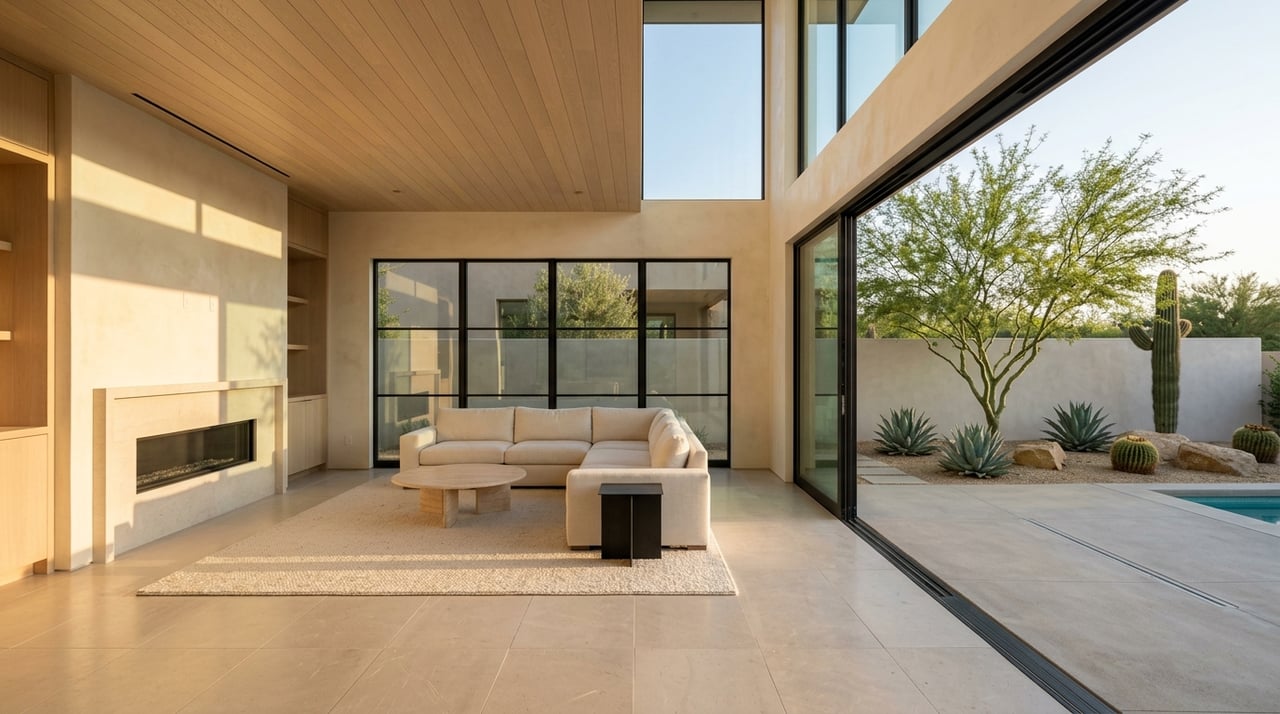
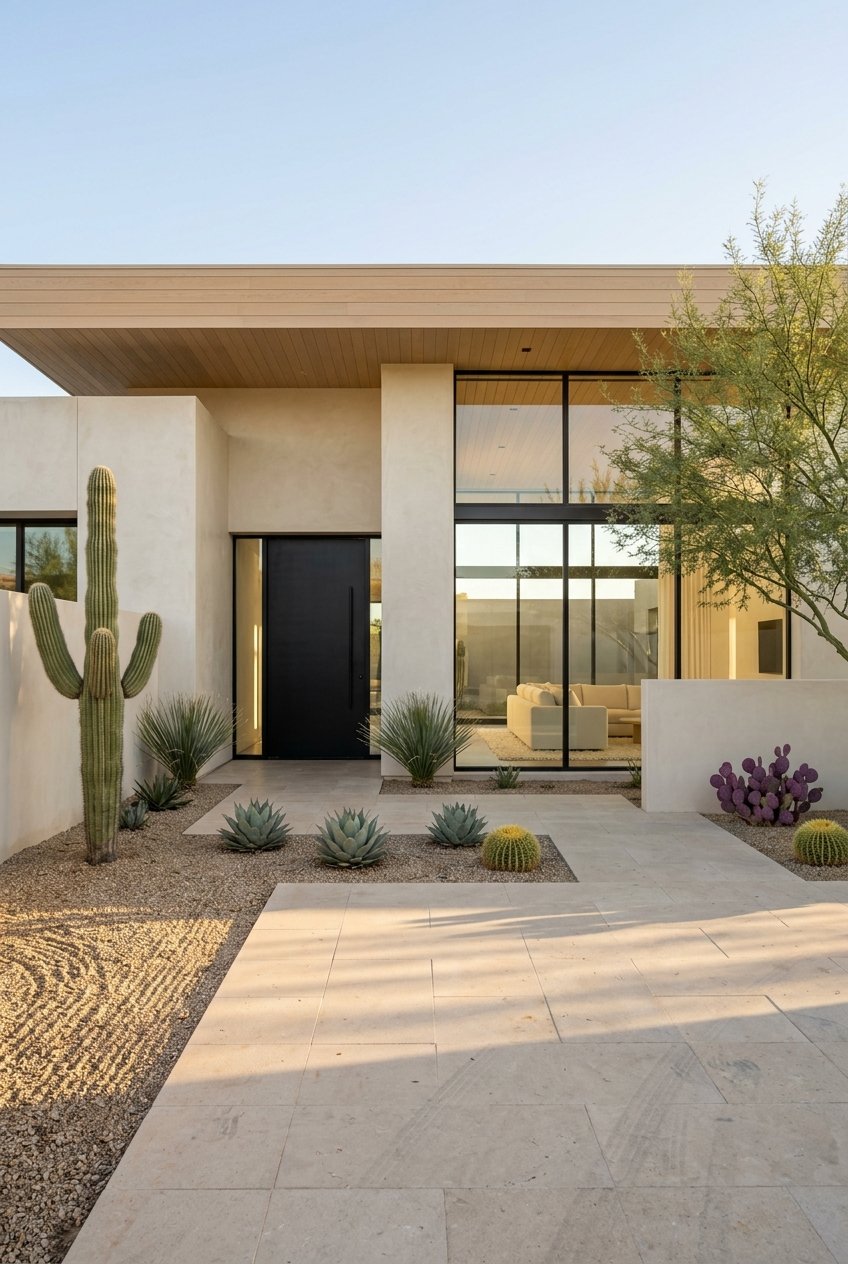
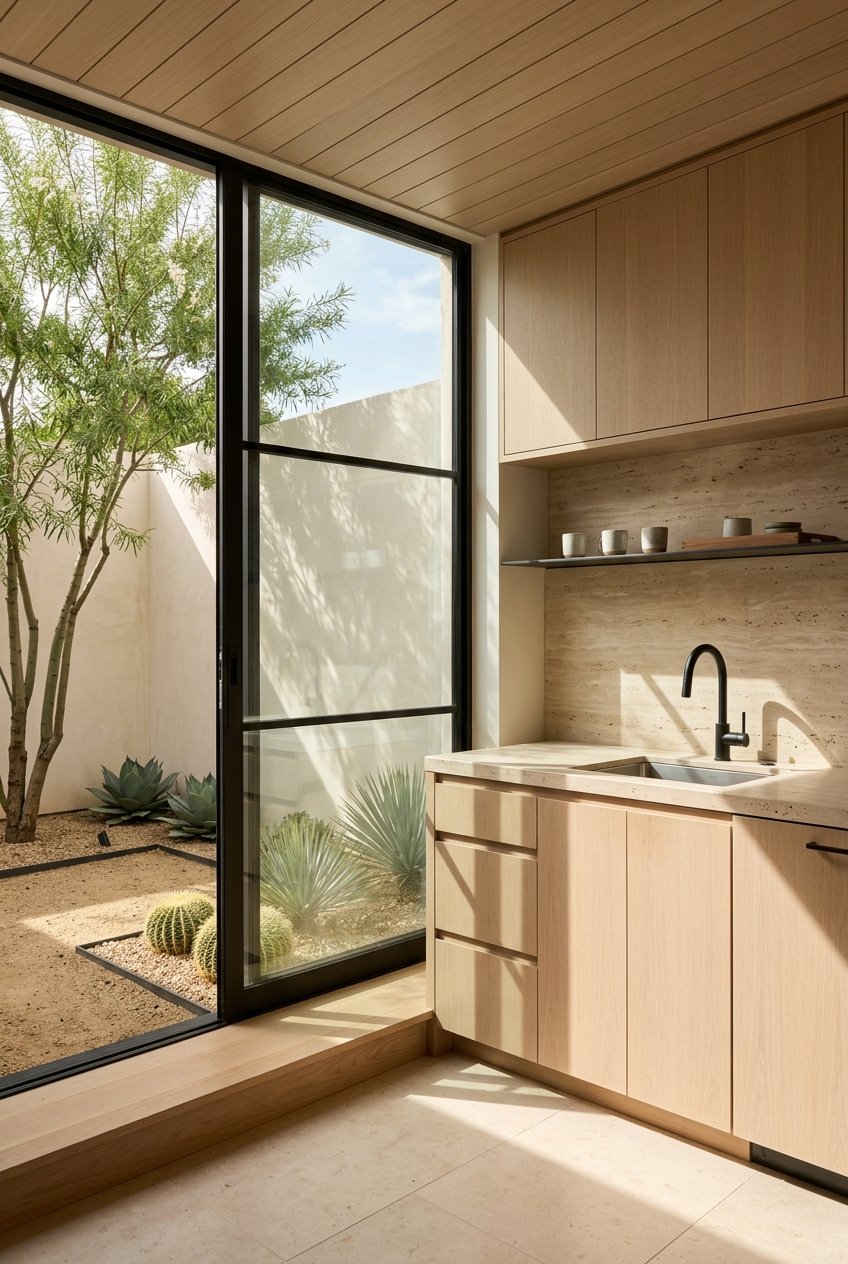
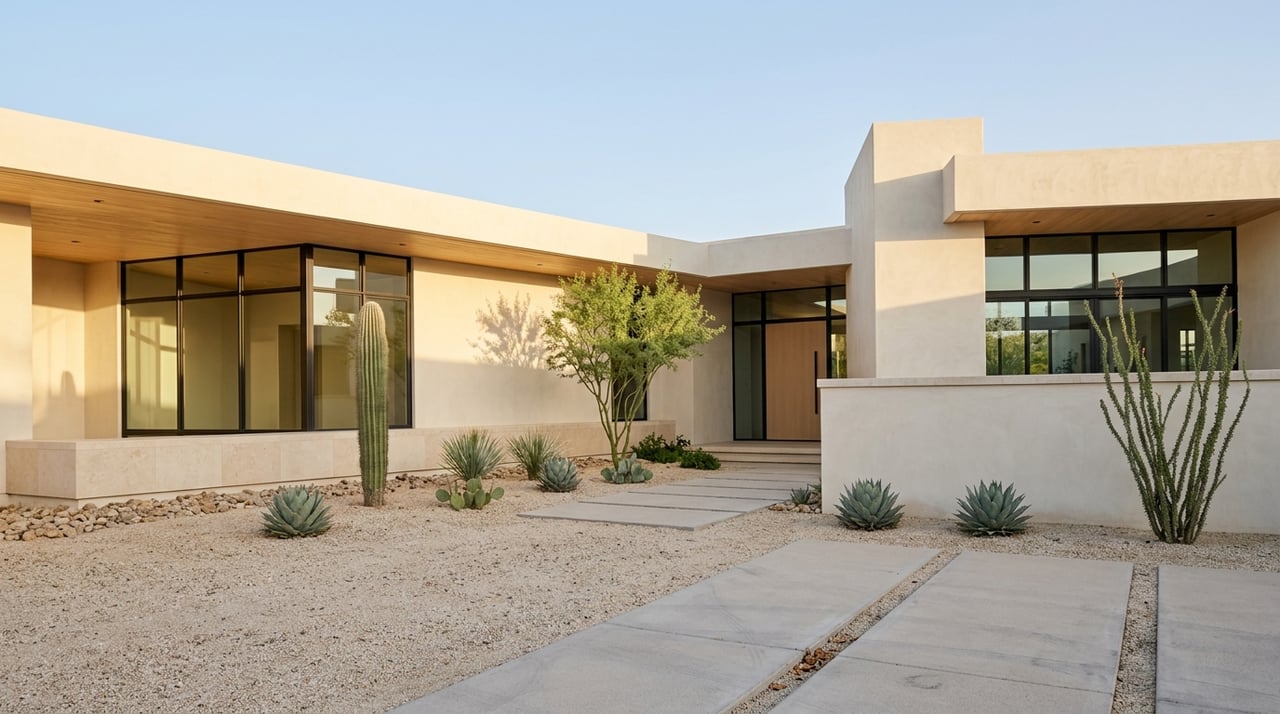
If one style captures the current Paradise Valley luxury market best, it is contemporary desert, sometimes called Sonoran contemporary. This style takes modern architecture and adapts it to the desert through low horizontal forms, generous glass, natural textures, and a strong connection to the outdoors.
You will often notice low rooflines, large windows, and minimal ornament right away. Instead of formal divided rooms, these homes typically center around a large great room or kitchen that opens toward terraces, courtyards, or pool areas.
This design approach works especially well in Paradise Valley because it complements view lots and hillside parcels. Expansive glass can frame mountains and desert surroundings, while subtle massing helps the home sit more naturally on the land.
Many newer luxury homes also extend the living experience outside. Outdoor kitchens, fire features, pool decks, and desert landscaping often make the house feel like an extension of the site instead of a structure placed apart from it.
What buyers notice in desert contemporary homes
When you step into a contemporary desert home in Paradise Valley, a few features tend to stand out:
- Clean horizontal lines
- Open floor plans with a central gathering space
- Walls of glass or large window openings
- Seamless flow to patios and terraces
- Natural materials and restrained color palettes
- A stronger focus on views, light, and privacy
For many buyers, this style feels current, calm, and tailored to the setting. It delivers a refined look, but its strongest appeal is often how naturally it handles the desert environment.
Mediterranean estates bring formal luxury
Another major style in Paradise Valley is the Mediterranean or Mediterranean-Roman estate. These homes usually present a more formal and classic expression of luxury, with architecture that emphasizes symmetry, arrival, and traditional detailing.
In this category, you may see arches, columns, stucco exteriors, decorative trim, loggias, groin-vault hallways, and courtyard water features. The exterior often creates a grand first impression, and the layout may feel more ceremonial than a contemporary desert home.
That difference shows up inside as well. Rather than one large flowing living zone, these homes may include a defined entry axis, more separation between public and private spaces, and rooms such as an office, library, guest suites, or collector-level garage space.
Even so, this style is not frozen in time. In Paradise Valley, Mediterranean architecture is often updated with more modern interiors and more open living spaces, so a home may look traditional from the street while feeling much more current once you are inside.
How Mediterranean homes often feel different
Mediterranean-style luxury homes usually appeal to buyers who like a more classic estate experience. Compared with desert contemporary homes, they often feel:
- More formal in layout and presentation
- More symmetrical in exterior design
- More detailed in trim and architectural ornament
- More structured in room separation
- More focused on a grand entry and arrival sequence
That does not make them less suited to Paradise Valley. In many cases, they still include resort-style outdoor living, large patios, pools, and courtyards that support the same desert lifestyle buyers want.
Pueblo-inspired homes add regional character
Pueblo-inspired and Southwestern homes bring a very different kind of luxury to Paradise Valley. These homes tend to feel warmer, more textured, and more rooted in the region than sleek contemporary estates.
Key visual cues often include stucco or adobe-like walls, flat or slightly sloped roofs hidden behind parapets, rounded corners, recessed windows, projecting roof beams known as vigas, and sheltered courtyards or patios. The overall effect is often softer and more sculptural.
This style has deep roots in the Valley, including the legacy of designer-builder Bill Tull, whose work incorporated Pueblo, Moorish, and Territorial influences. His homes became known for adobe construction, thick walls, carved wood details, rounded forms, and a sense that the house grew from the earth itself.
For today’s buyer, that kind of home can stand out quickly. In a market where many luxury properties lean modern, Pueblo-inspired homes often read as custom, regional, and highly distinctive.
Signature elements in Southwestern homes
When touring a Pueblo-inspired home, you may notice features like:
- Thick-looking stucco or adobe-style walls
- Rounded edges and sculptural forms
- Vigas and latillas
- Recessed window openings
- Courtyards and shaded patios
- Fireplaces with a handcrafted feel
These homes often appeal to buyers who want strong sense of place. They can feel especially memorable because the materials and forms reflect the broader desert Southwest, not just current design trends.
Most Paradise Valley homes are hybrids
One of the most useful things to know about Paradise Valley architecture is that many homes do not fit neatly into one category. Local design coverage regularly shows how contemporary, Mediterranean, Spanish Colonial, Territorial, and Southwestern elements can be blended in one property.
That means the label on a listing only tells part of the story. A Mediterranean exterior may open into a modern floor plan. A contemporary home may borrow warmer textures and courtyard concepts from Southwestern design.
For you as a buyer or seller, that makes it more helpful to look beyond the style name. The better question is whether the home handles the desert well and creates a lifestyle that feels natural on the site.
Features that matter across styles
No matter the architectural label, many Paradise Valley luxury homes share a common design logic. The site, the climate, and the surrounding views often matter just as much as the façade.
Because hillside regulations require homes to respond to topography and natural features, many properties are designed around view corridors, shaded terraces, native or low-water landscaping, and privacy. That often creates a stronger connection between architecture and setting.
You will also see lifestyle features repeated across styles. Detached guest houses or casitas, home offices, gyms, large primary suites, oversized garages, and outdoor kitchens are all common in the luxury segment.
These features help explain why two homes with very different appearances can still compete for the same buyer. In Paradise Valley, luxury is often defined by how well a property balances comfort, privacy, flow, and the surrounding desert environment.
What this means if you are buying
If you are shopping for a luxury home in Paradise Valley, architectural style can help you narrow your search. It gives you clues about layout, materials, atmosphere, and how the home may interact with the lot.
If you prefer open entertaining spaces, broad glass, and a quieter visual palette, contemporary desert homes may feel like the best fit. If you want a more traditional estate feel with formal rooms and a stronger arrival experience, a Mediterranean property may be more your speed.
If you are drawn to craftsmanship, regional materials, and a home that feels deeply connected to the Southwest, Pueblo-inspired architecture may stand out most. In every case, it helps to evaluate how the home handles light, shade, privacy, outdoor living, and mountain views.
What this means if you are selling
If you own a luxury home in Paradise Valley, your architectural style is a key part of the marketing story. Buyers at this level are not only comparing finishes and square footage. They are comparing mood, setting, design intent, and how convincingly a property delivers the Paradise Valley lifestyle.
That is why presentation matters. Professional photography, strong listing positioning, and a clear explanation of the home’s architectural identity can help buyers understand what makes your property distinct.
It also helps to frame the home in a way that matches what Paradise Valley buyers value most. Features like indoor-outdoor flow, mountain views, terraces, privacy, natural materials, and site-sensitive design often deserve as much attention as room count.
Whether a property is sleek and modern, classically formal, or rich in Southwestern character, the goal is the same. You want buyers to see not just a house, but a home that belongs in Paradise Valley.
If you are thinking about buying or selling in Paradise Valley, working with a local team that understands how architecture, presentation, and market positioning come together can make a real difference. Connect with The Hoods Real Estate Team for concierge-style guidance tailored to the Paradise Valley luxury market.
FAQs
What architectural styles are most common in Paradise Valley luxury homes?
- Paradise Valley luxury homes often fall into three broad groups: contemporary desert, Mediterranean-style estates, and Pueblo-inspired or Southwestern homes, with many properties blending elements from more than one style.
What defines contemporary desert architecture in Paradise Valley?
- Contemporary desert homes in Paradise Valley usually feature low rooflines, expansive glass, minimal ornament, open floor plans, and strong indoor-outdoor flow that responds to the desert landscape and mountain views.
What makes Mediterranean homes in Paradise Valley different from modern homes?
- Mediterranean homes in Paradise Valley often feel more formal, with arches, columns, courtyards, and more structured room layouts, while modern homes typically emphasize cleaner lines, open living areas, and simpler detailing.
What are Pueblo-inspired features in Paradise Valley homes?
- Pueblo-inspired homes in Paradise Valley often include stucco or adobe-style walls, parapets, rounded corners, vigas, recessed windows, and sheltered courtyards that create a warm, regional character.
Why do Paradise Valley luxury homes focus so much on outdoor living?
- Paradise Valley’s sunny climate, mountain views, and local design context support features like shaded patios, terraces, pools, courtyards, and outdoor kitchens that extend daily living into the landscape.
How should sellers market architectural style in Paradise Valley real estate?
- Sellers should present architectural style as part of the home’s full lifestyle story by highlighting design details, site integration, indoor-outdoor flow, views, privacy, and professional visual marketing.