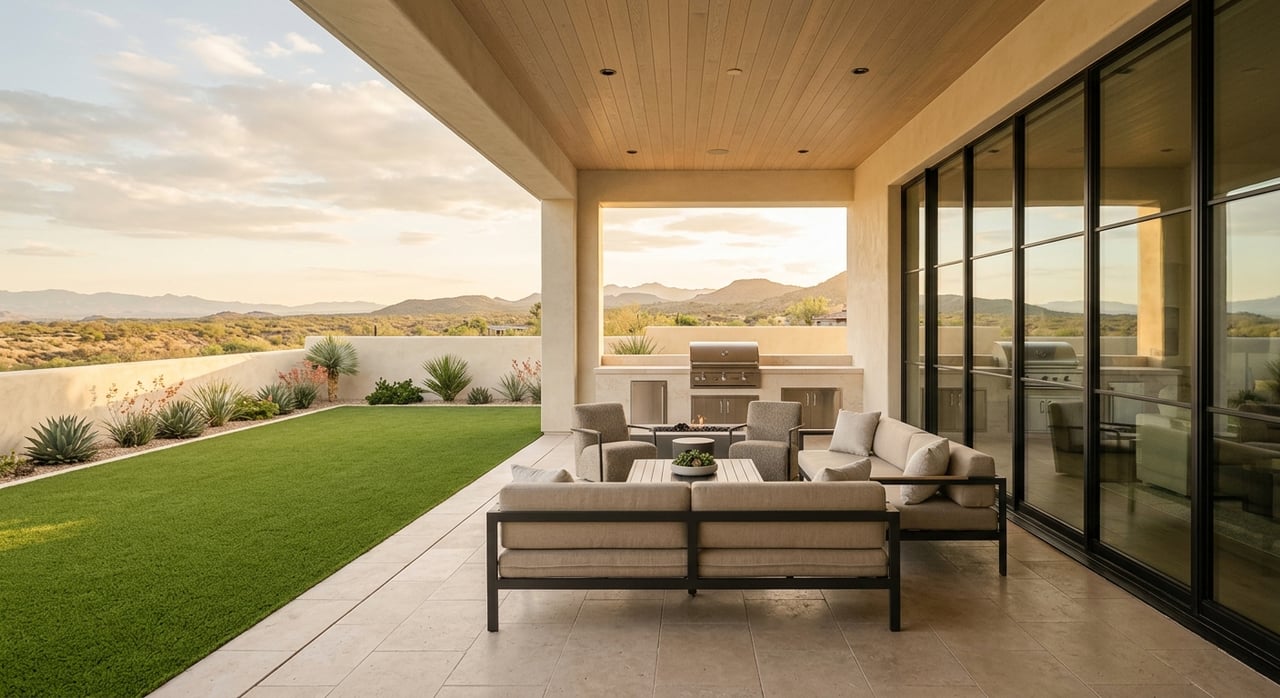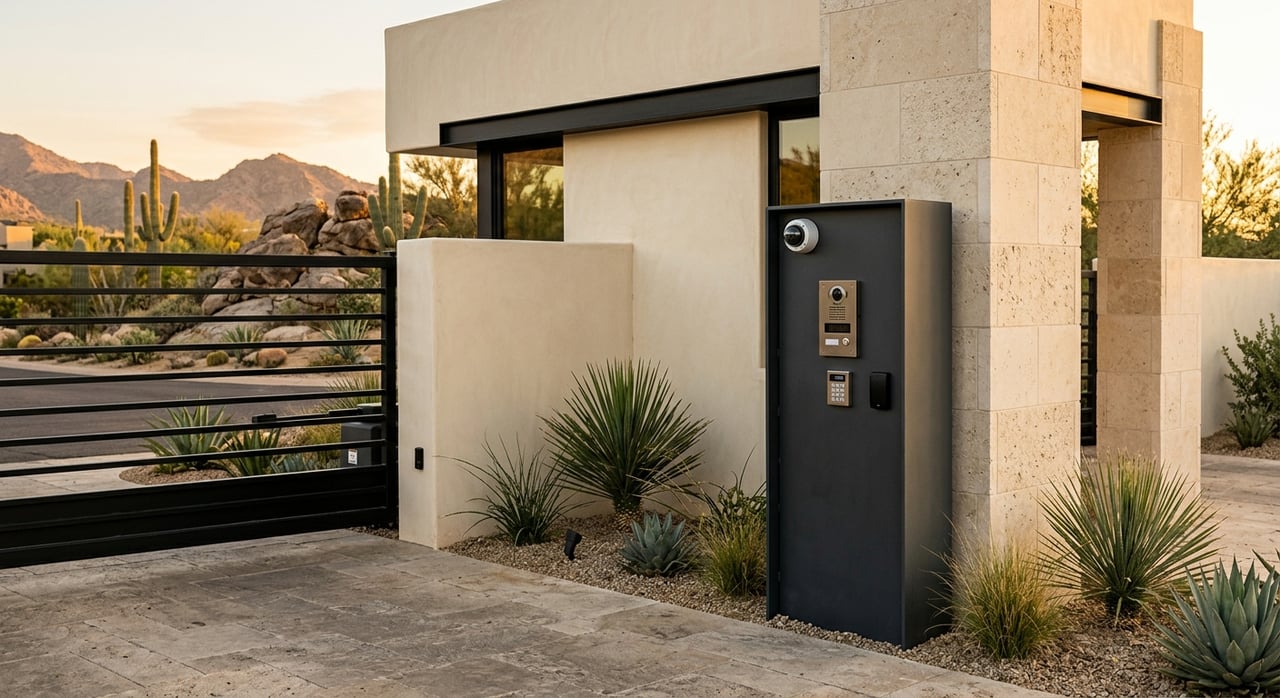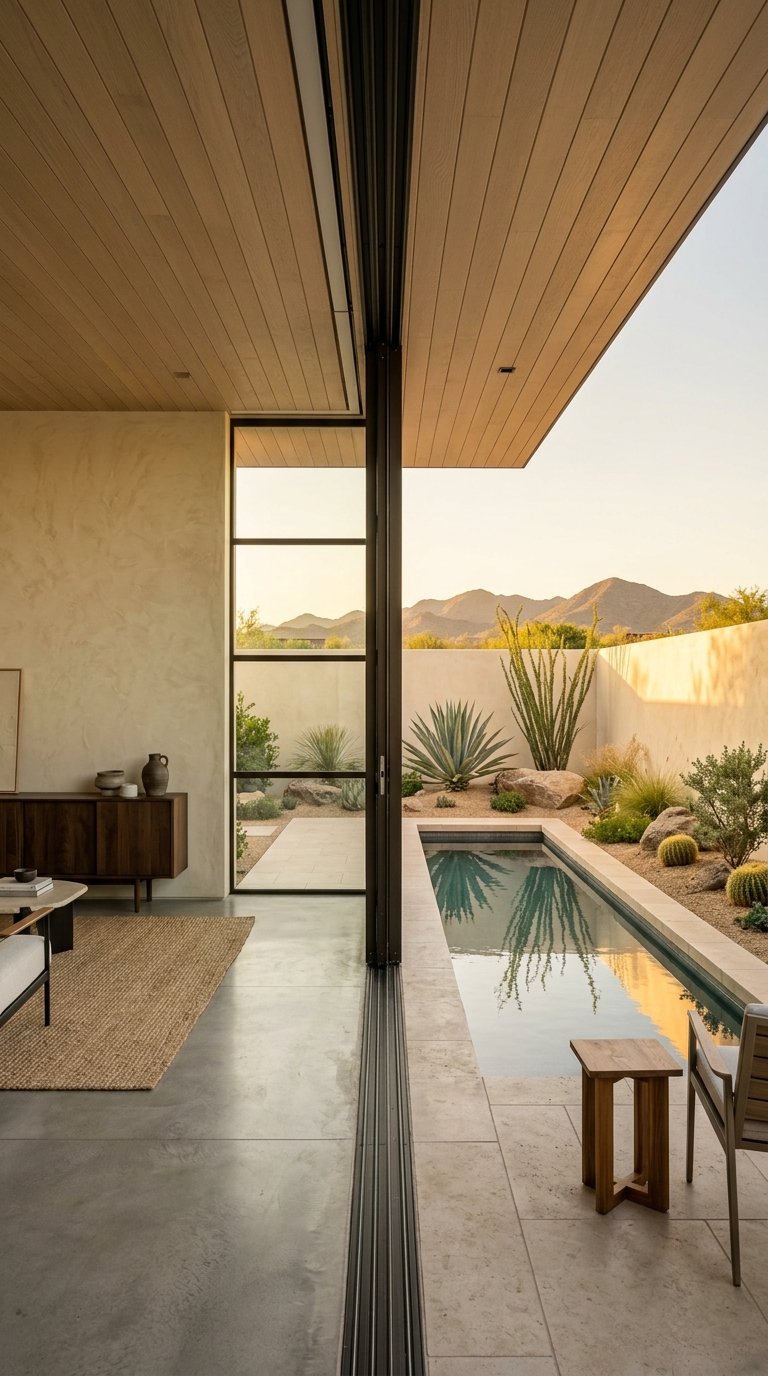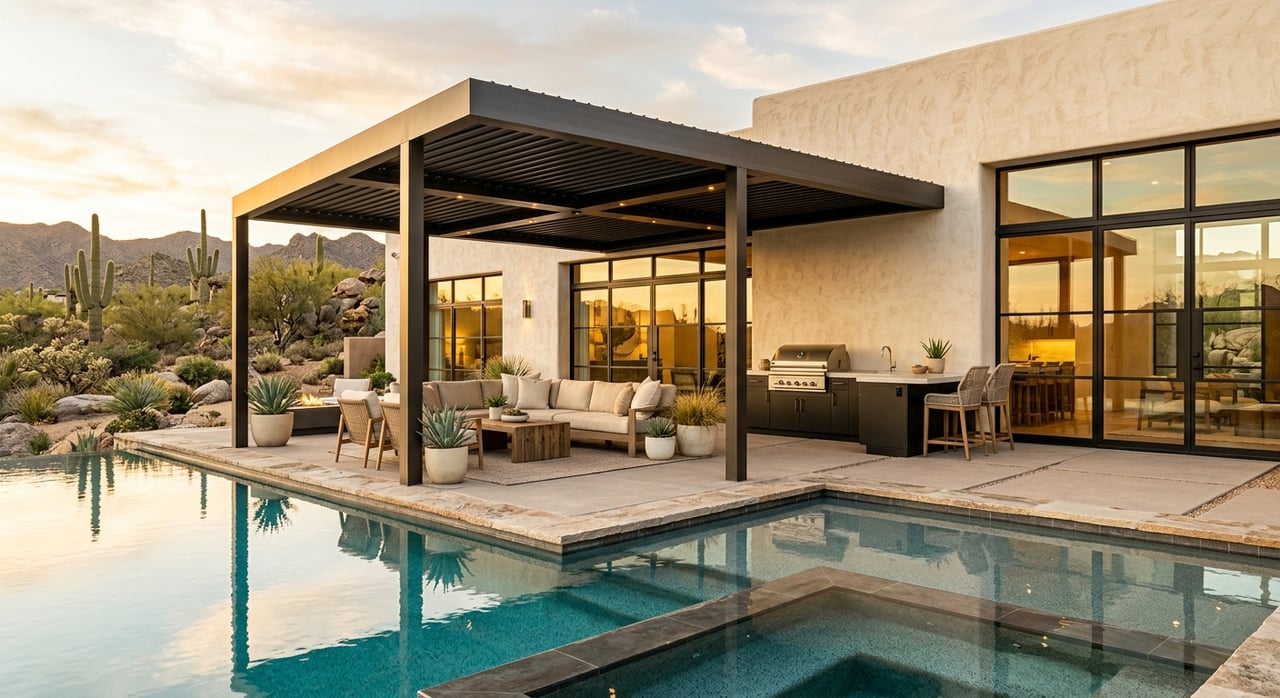
If you want outdoor living in Paradise Valley to feel truly elevated, it has to do more than look beautiful in photos. It needs to work with the desert, handle intense summer heat, and feel seamless with the property’s architecture and views. When you get that balance right, your backyard can live like a private resort while still feeling perfectly at home in Paradise Valley. Let’s dive in.
Why Desert-Rooted Design Works
Paradise Valley has a distinct design context, and that matters when you plan outdoor living spaces. Local priorities emphasize preserving community character, scenic beauty, and the natural desert landscape, which means the most successful resort-style spaces usually feel connected to the Sonoran Desert rather than imported from another climate.
That often translates into a cleaner, quieter design approach. Instead of oversized additions or visually heavy features, the best outdoor environments tend to use low-profile structures, open sightlines, and thoughtfully arranged outdoor rooms. The result feels refined, livable, and in step with the setting.
Climate Should Lead the Plan
In the Phoenix area, average daily highs reach 104.2 degrees in June, 106.5 in July, and 105.1 in August. Arizona’s monsoon season typically runs from mid-June through the end of September, bringing thunderstorms, lightning, gusty winds, and heavy rain.
That is why resort-style outdoor living here starts with performance, not decoration. Shade, airflow, durable materials, and proper drainage are not optional if you want the space to stay comfortable and functional throughout the year.
Focus on Comfort First
A beautiful backyard will not feel luxurious if it is hard to use in the heat. The strongest designs usually create multiple comfort zones so you can move through the day and evening more easily.
Think in layers instead of one large patio. A shaded lounge area, a protected dining space, and an evening gathering spot often create a more useful layout than one oversized outdoor area with no clear purpose.
Build Outdoor Rooms With Purpose
Resort-style living often feels effortless, but in Paradise Valley, the most polished spaces are usually made from substantial, well-planned elements. The town’s building-permit valuation guidance treats covered patios, BBQs, kiva fireplaces, water fountains, and water features as real project items, which is a good reminder that lasting quality comes from thoughtful construction.
For homeowners, that means it helps to think beyond furniture and accessories. Permanent features usually shape the experience more than decor alone.
Core Outdoor Spaces to Consider
A balanced outdoor layout often includes:
- A shaded seating area for daytime use
- A defined dining zone with weather protection
- A pool or spa area designed for both relaxation and circulation
- An evening gathering space anchored by lighting or a fireplace
- Clear walking paths that connect each area without cluttering views
When those spaces are composed well, the yard feels calm and intentional. That is often the difference between a backyard that simply looks upgraded and one that feels like a true extension of the home.
Pools and Water Features Need Planning
Pools, spas, and water features are central to the resort look, but they are formal projects in Paradise Valley. The town has a dedicated permit path for pools and spas that calls for a site plan, structural calculations, and engineer-prepared pool plans.
Pool-related work can also trigger dust-control documentation. The town also states that chlorinated pool water may not be discharged to the street, storm drains, washes, or a neighboring property, although certain drainage into the sanitary sewer is allowed.
Why This Matters for Sellers
If you are improving a property before listing, timing matters. Paradise Valley requires electronic permit submittals, all building permit applications require plan review, and the initial review can take up to 30 business days, followed by additional processing time after approval.
That means larger outdoor projects should be planned well ahead of a listing date. Waiting too long can create avoidable stress, especially if the goal is to present a finished, polished backyard to the market.
Landscape for a Lush Desert Look
One of the biggest misconceptions about desert landscaping is that low-water design has to look sparse. In Paradise Valley, the stronger approach is usually layered and intentional, with structure, shade, and seasonal variation.
The town’s landscape guidelines emphasize tree-shaded streets and paths, along with native shrubs, ground cover, and wildflowers where trees are not practical. That supports a landscape style that feels lush in composition, even when it is designed for water efficiency.
Plants That Fit the Setting
Desert-adapted plants can still create softness, color, and visual interest. A well-composed yard may combine canopy, flowering accents, and sculptural forms to create depth.
Examples mentioned in local and Arizona-based guidance include:
- Palo verde for desert character and filtered shade
- Mesquite for form, habitat value, and very low irrigation needs
- Bird of paradise for a popular flowering accent in the low desert
- Agave, yucca, cactus, and ocotillo for strong silhouettes and texture
Used together, these plants can make a yard feel curated instead of minimal. That is especially important in luxury outdoor spaces, where every element should look intentional.
Water Efficiency Still Matters
A polished landscape is not just about plant selection. It also depends on how the yard is irrigated and maintained over time.
Water guidance referenced in the research points to practical strategies such as adding 2 to 3 inches of mulch on exposed soil, using vegetation on steeper slopes to reduce runoff, and installing weather-responsive irrigation controllers. Arizona water guidance also notes that rainwater harvesting can help reduce potable water use for irrigation, especially when paired with native or desert-adapted planting.
Smart Irrigation Supports Better Design
Low-water landscaping can still waste water if it is poorly designed or maintained. In practice, that means the most attractive outdoor spaces are often the ones that use water thoughtfully, not simply the ones that remove turf.
A strong plan usually aims for:
- Targeted irrigation where plants actually need it
- Mulch to help retain soil moisture
- Drainage that supports heavy seasonal rain
- Plant groupings with similar water needs
These choices support both appearance and long-term upkeep. For many buyers and sellers, that balance adds real value because the space feels easier to live with.
Larger Renovations May Trigger Plant Review
If your outdoor project is extensive, native plant rules may come into play. Paradise Valley requires a Native Plant Preservation Plan for new construction and additions valued at $500,000 or more, as well as for demolition and grading, before protected plants are removed or relocated.
Protected species include plants such as palo verde, mesquite, ironwood, saguaro, barrel cactus, ocotillo, and desert night-blooming cereus. For homeowners, this means mature desert landscaping may be both a visual asset and a planning consideration during renovation.
Resort-Style Design Can Help Market Presentation
Outdoor living is not just a lifestyle feature. It can also shape how a property presents when it is time to sell.
According to the research provided, 97 percent of REALTORS believe curb appeal is important when working with a seller, and 98 percent say it matters to buyers. In the same report, 37 percent of consumers said beauty and aesthetics were the most important result of an outdoor remodel, while 29 percent cited better functionality and livability.
What Buyers Often Notice
In a market like Paradise Valley, buyers are often drawn to outdoor spaces that feel complete and coherent. A backyard tends to stand out more when it offers comfort, privacy, shade, and a strong connection to the home’s architecture.
Features that often photograph and show well include:
- Defined seating and dining areas
- Clean hardscape lines and uncluttered views
- Desert planting with texture and layered height
- Pool and spa areas that feel integrated into the overall plan
- Evening ambiance through lighting and gathering spaces
These are the details that help outdoor living feel like part of the property’s value story, not an afterthought.
The Best Backyards Feel Effortless
The most successful resort-style outdoor living in Paradise Valley usually does not try too hard. It feels calm, rooted in the desert, and shaped around how you actually want to live.
That is the sweet spot for both enjoyment and resale. When shade, structure, planting, and planning all work together, your outdoor space can feel luxurious in a way that suits Paradise Valley beautifully.
Whether you are preparing to sell or looking for a home with exceptional outdoor living potential, The Hoods Real Estate Team brings a high-touch, local approach to luxury real estate in Paradise Valley and across the greater Phoenix Valley.
FAQs
What does resort-style outdoor living mean in Paradise Valley?
- In Paradise Valley, resort-style outdoor living usually means a private backyard designed around shade, comfort, desert-adapted landscaping, pools or spas, and outdoor rooms that fit the property’s views and architecture.
Why should Paradise Valley outdoor design reflect the desert?
- Local guidance emphasizes preserving scenic beauty, natural landscape, and community character, so outdoor spaces often feel most successful when they work with the Sonoran Desert rather than against it.
What climate issues affect outdoor living design in Paradise Valley?
- Extreme summer heat, average highs above 100 degrees in summer months, and monsoon season with wind and heavy rain make shade, airflow, durable materials, and drainage essential design priorities.
Do Paradise Valley pools and spas require permits?
- Yes. Paradise Valley has a dedicated permit process for pools and spas that requires project documentation such as a site plan, structural calculations, and engineer-prepared pool plans.
What plants work well for a Paradise Valley resort-style yard?
- Research cited for this article highlights palo verde, mesquite, bird of paradise, agave, yucca, cactus, and ocotillo as strong options for low-desert landscapes with structure and visual interest.
Can larger Paradise Valley outdoor renovations affect native plants?
- Yes. New construction, major additions, demolition, and grading projects may require a Native Plant Preservation Plan before certain protected native plants are removed or relocated.